




















.svg)











.svg)





















.png)

.png)
The ability to execute requests across external systems, act as a store of frameworks, and standardize processes to execute those requests are just some of ServiceNow's greatest strengths. However, the most common request ServiceNow sees is to reduce the amount of work necessary to resolve tickets or make upgrades across systems. Yet, no matter what, the goal is to stay completely within ServiceNow.
With that goal in mind, I connected ServiceNow, Ansible, and Oracle Databases to execute SQL queries using RapDev's Oracle Database Integration. The integration provides a dynamic catalog item, consolidates the approvals process, and handles errors for requests.
The figure below provides an example of the flow:
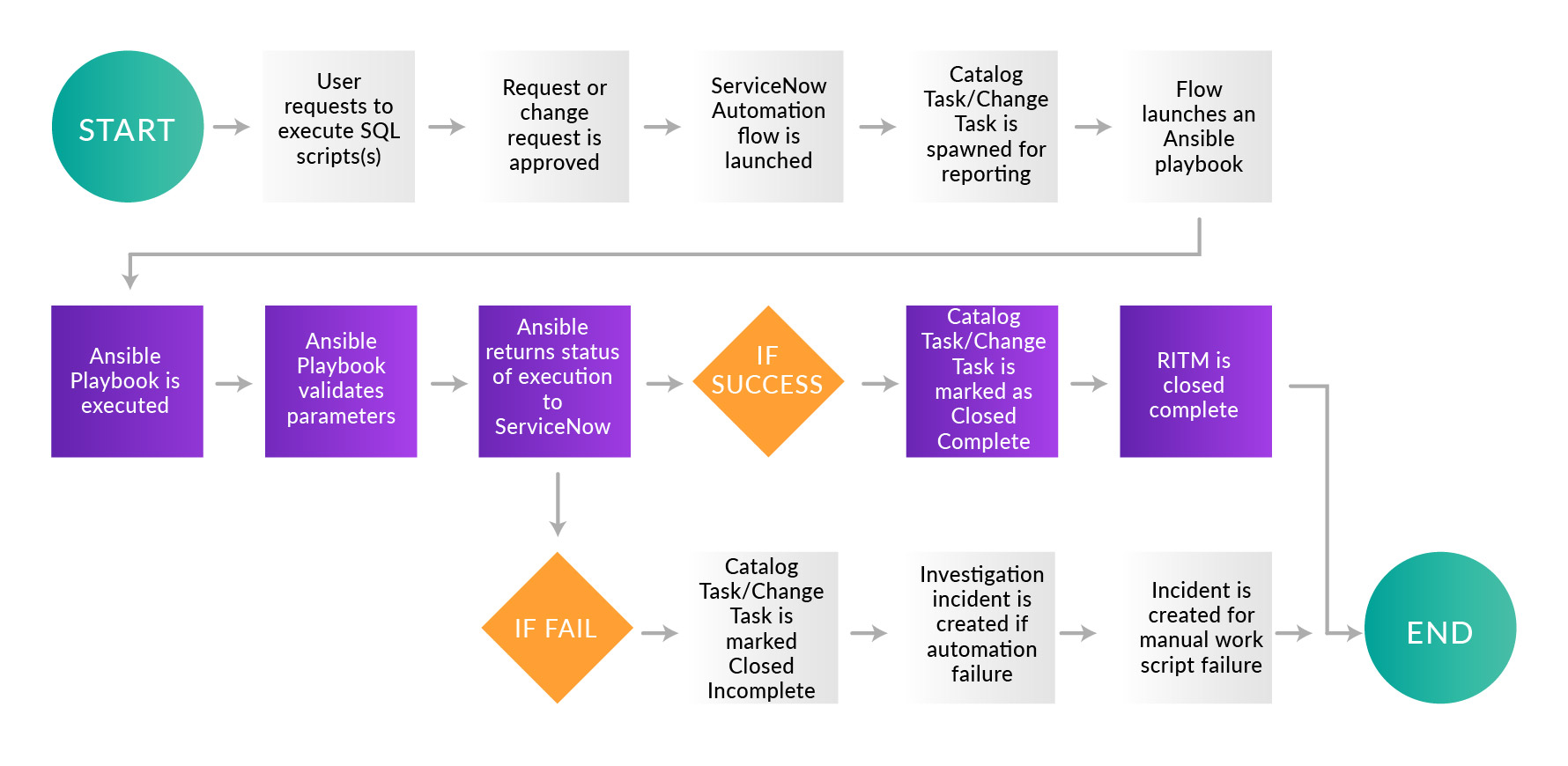
ServiceNow is responsible for the front-end form to display to the end-user. It routes the request and scripts to the external system, in this case, Ansible. Ansible then acts as a middleman connecting to the Oracle Servers and executes the requests on those servers.
From there, I used Ansible Notifications to return the status of the Ansible Job to ServiceNow. This method then paths the request to the appropriate error or success process. It also triggers a notification detailing the status and possible error messages to the engineers.
RapDev's Oracle Database Integration provides an efficient way for Oracle Database engineers to execute their requests in ServiceNow. It helps avoid manually executing the requests themselves on the Oracle Servers. The integration also introduces additional capabilities such as a script termination flow to end any long-running requests. Along with that, engineers can comply with any auditing and approval requirements, and gain insight into their request executions within a centralized location.
While this integration is Oracle Database specific, RapDev is constantly developing integrations for other systems. If you are looking to optimize any of your organization's existing processes, get in touch!